
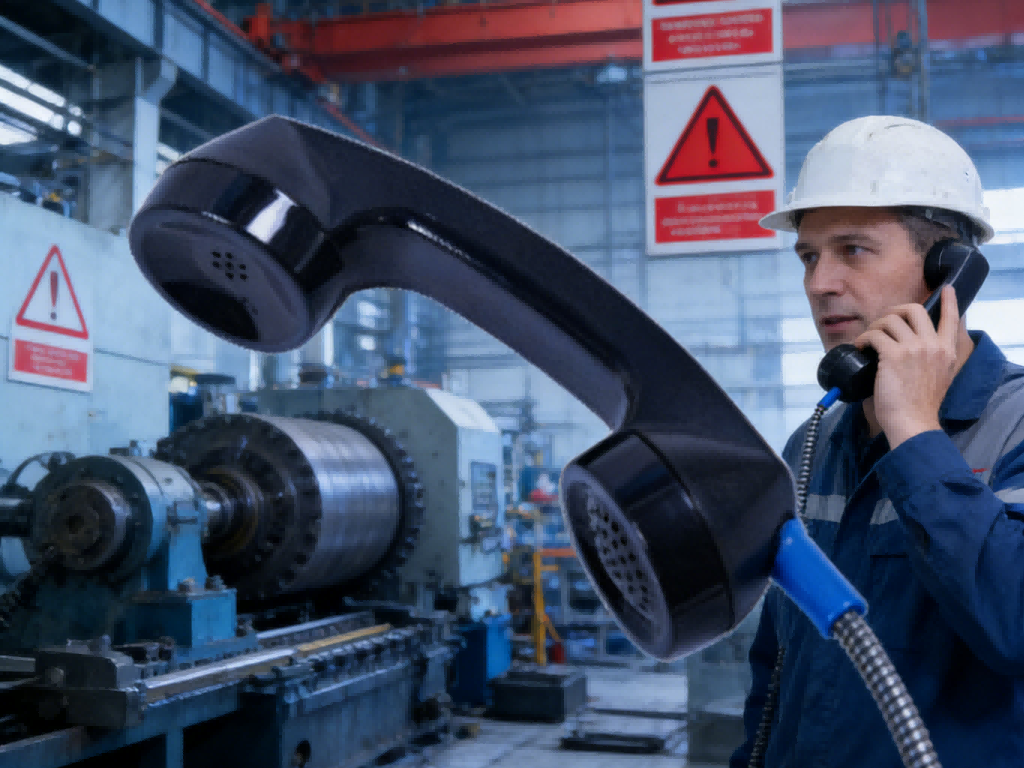
The Heavy-Duty Telephone Handset significantly enhances safety by providing reliable communication in extreme conditions. This specialized handset also boosts durability, easily withstanding harsh environments that would destroy standard equipment. This prevents crucial communication failures, which can lead to serious accidents, and ultimately ensures a much safer working environment for everyone.
Key Takeaways
- Heavy-duty telephone handsets make industrial places safer. They help people talk clearly, even when it is noisy or there is an emergency.
- These handsets are very strong. They can handle tough conditions like dust, water, and extreme heat, so they last a long time.
- Using these strong phones saves money over time. They do not break often, so you do not have to buy new ones or fix them as much.
Enhancing Safety with a Heavy-Duty Telephone Handset
Safety is a top priority in any industrial setting. When you work in places with heavy machinery, hazardous materials, or extreme conditions, clear communication can literally save lives. A Heavy-Duty Telephone Handset plays a huge role in making these environments safer. It ensures that messages get through, even when everything else seems to go wrong.
Uninterrupted Communication in Critical Situations
Imagine an emergency. Perhaps a machine breaks down, or someone needs immediate help. In these moments, every second counts. Standard phones often fail in harsh industrial environments. They might get damaged, or the signal could drop. A heavy-duty handset, however, keeps working. It provides a reliable link between workers, supervisors, and emergency teams. This constant connection means people can quickly report problems, ask for assistance, or give vital instructions. This uninterrupted communication helps prevent small issues from becoming big disasters. It ensures everyone stays informed and can act fast when it matters most.
Noise Cancellation and Clear Audio Transmission
Industrial facilities are often very loud places. The constant hum of machinery, alarms, and other noises can make it almost impossible to hear someone on a regular phone. This is where a heavy-duty handset truly shines. These devices come with advanced noise cancellation technology. They filter out background noise, making voices clear and easy to understand. Think about it: clear audio means fewer misunderstandings. Workers can receive precise instructions without guessing. This reduces the chance of errors that could lead to accidents. When you can hear and be heard clearly, you make better decisions, and that keeps everyone safer.
Hands-Free and Ergonomic Design for Operator Safety
Operators in industrial settings often need both hands free to do their jobs. They might be operating controls, handling tools, or moving materials. A traditional phone can be a distraction and even a hazard. Many heavy-duty handsets offer hands-free options, like speakerphones or compatibility with headsets. This allows workers to communicate while keeping their hands on their tasks. Furthermore, these handsets feature ergonomic designs. This means they fit comfortably in the hand and are easy to use, even when wearing gloves. An ergonomic design reduces strain and fatigue, which helps operators stay focused and alert. When equipment is easy to use and doesn’t get in the way, workers can concentrate on safety and efficiency.
Ensuring Durability of the Heavy-Duty Telephone Handset in Harsh Environments
Industrial settings are tough on equipment. Dust, water, chemicals, and constant vibrations can quickly destroy standard electronics. A Heavy-Duty Telephone Handset is different. Manufacturers design these devices to survive where other phones fail. They build them for resilience, ensuring they keep working no matter what.
Robust Construction Materials and Design
You might wonder what makes these handsets so tough. It starts with the materials. Manufacturers use reinforced plastics, often ABS or polycarbonate, which resist impacts and abrasions. Some models feature metal alloys for even greater strength. These materials protect the internal components from physical damage. The design also plays a crucial role. Engineers create sealed enclosures, preventing dust and debris from getting inside. They often include features like rubberized grips, which make the handset easier to hold and absorb shock from drops. This robust construction means the handset can take a beating and still perform reliably. It stands up to accidental drops, bumps, and the general wear and tear of a busy industrial environment.
Resistance to Environmental Factors
Industrial facilities present many environmental challenges. Think about areas with high humidity, splashing liquids, or airborne particles. A standard phone would quickly succumb to these conditions. Heavy-duty handsets, however, boast impressive resistance to these factors. They often carry an Ingress Protection (IP) rating, like IP67 or IP68. This rating tells you the device is dust-tight and can even withstand immersion in water. This protection extends to chemical resistance too. Many models can endure exposure to oils, greases, and common industrial cleaning agents without degrading. This resistance ensures the handset remains functional and safe to use, even in the dirtiest or wettest parts of a plant.
Withstanding Extreme Temperatures and Vibrations
Industrial operations often involve extreme temperatures. Some areas might get incredibly hot, like near furnaces, while others could be freezing cold. A heavy-duty handset handles these temperature swings without issues. Its components are specifically chosen and tested to operate reliably across a wide temperature range. This prevents internal circuits from failing due to heat or cold. Furthermore, industrial machinery creates constant vibrations. These vibrations can loosen connections and damage delicate electronics over time. Manufacturers design these handsets to absorb and resist these vibrational forces. They use secure internal mountings and robust connectors. This careful engineering ensures the handset maintains its integrity and continues to provide clear communication, even when mounted on vibrating equipment or used in high-vibration zones.
Long-Term Benefits and Cost-Effectiveness of a Heavy-Duty Telephone Handset
Investing in a Heavy-Duty Telephone Handset brings significant long-term advantages. These benefits extend beyond immediate safety improvements. They also contribute to a facility’s financial health and operational efficiency. Companies see real savings and better performance over time.
Reduced Maintenance and Replacement Costs
Standard telephones simply do not last long in industrial settings. Dust, moisture, and impacts quickly damage them. This means frequent repairs or complete replacements. These costs add up fast. A heavy-duty handset, however, withstands these harsh conditions. Its robust build means it breaks down less often. Facilities spend less money on fixing or buying new communication devices. This reduces maintenance budgets and saves valuable time for staff.
Compliance with Industry Safety Standards
Industrial facilities must follow strict safety rules. These rules often require reliable communication systems. A heavy-duty handset helps companies meet these important standards. It ensures workers can always communicate during emergencies or routine tasks. This compliance avoids potential fines and legal issues. It also shows a company’s commitment to worker safety. This builds trust and a positive reputation.
Increased Operational Uptime and Productivity
Communication breakdowns can stop work. If a team cannot talk to each other, tasks slow down or halt completely. A reliable heavy-duty handset prevents these interruptions. Workers quickly report issues, get instructions, and coordinate efforts. This smooth communication keeps operations running without unnecessary delays. It boosts overall productivity. When communication is always clear and available, teams work more efficiently and achieve their goals faster.
Heavy-duty industrial telephone handsets are indispensable for enhancing both safety and durability in industrial facilities. Their robust design ensures reliable communication in critical moments, preventing accidents. These handsets withstand harsh environments, guaranteeing long-term operational integrity and cost savings. Investing in a Heavy-Duty Telephone Handset directly translates to a safer, more efficient, and more durable industrial operation.
FAQ
What makes an industrial telephone handset “heavy-duty”?
Manufacturers build them with robust materials like reinforced plastics or metal alloys. They also feature sealed designs to protect against dust, water, and impacts. 🛠️
How does a heavy-duty handset improve safety in a factory?
It provides clear, uninterrupted communication, even in noisy or critical situations. This helps workers report problems and receive instructions quickly, preventing accidents. 🗣️
Do these specialized handsets cost a lot more than regular phones?
While the initial cost might be higher, their durability reduces maintenance and replacement expenses. This makes them cost-effective over time. 💰