
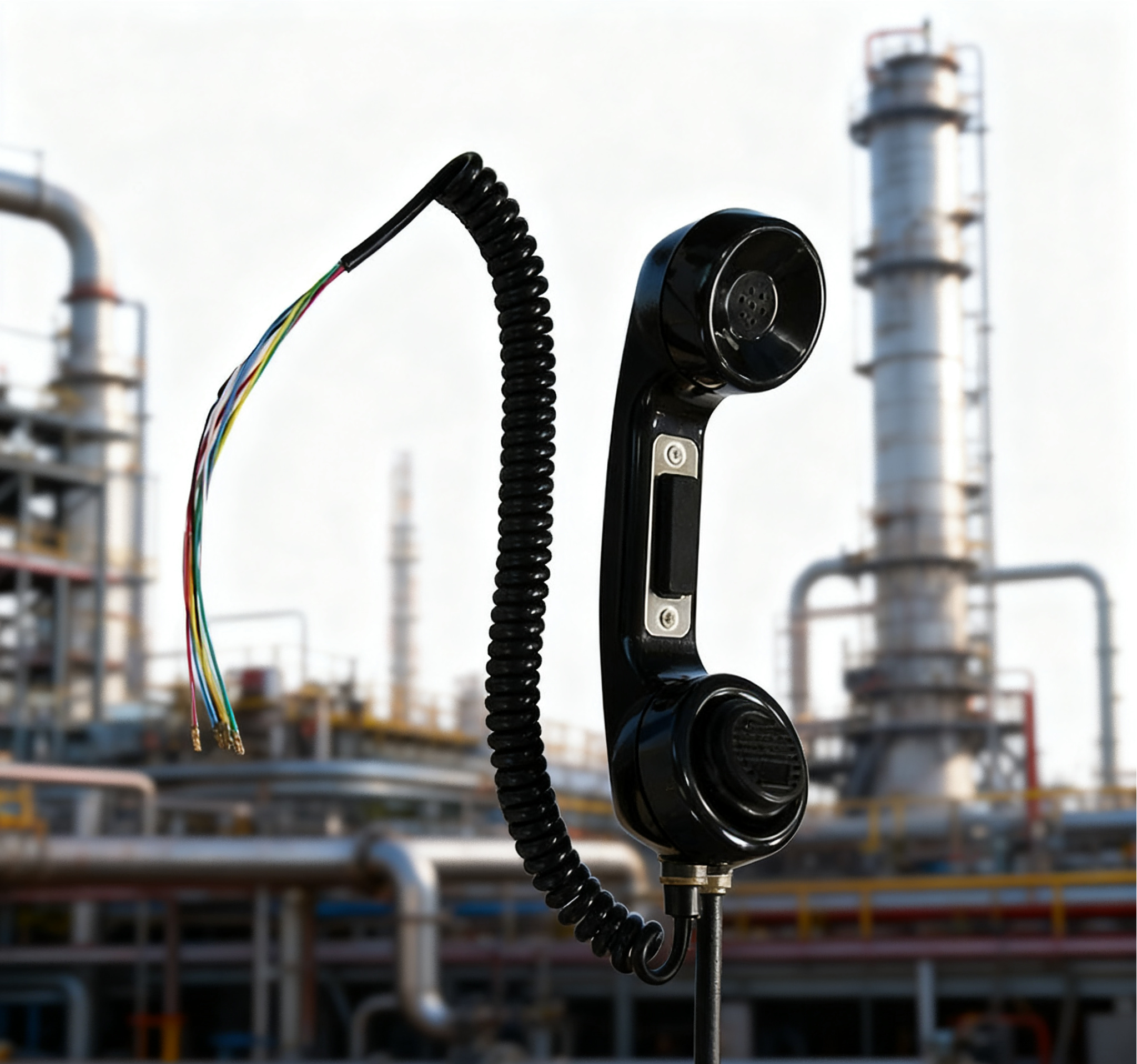
Industrial telephone handsets are vital for reducing ignition risks in hazardous chemical environments. They use intrinsically safe designs, strong explosion-proof enclosures, and special non-sparking materials. These features stop sparks, limit heat, and control static electricity. This removes possible ignition sources when flammable substances are around.
Key Takeaways
- Industrial telephone handsets prevent fires. They use special designs. These designs stop sparks and control heat.
- These phones have strong cases. The cases contain any internal explosions. They also keep out dangerous gases.
- Certifications like ATEX and UL show the phones are safe. These marks mean experts have tested them. They ensure the phones will not cause an explosion.
Understanding Ignition Sources and the Need for Specialized Industrial Telephone Handsets

Common Ignition Sources in Chemical Environments
Chemical environments often contain flammable gases, vapors, or dusts. Many things can cause these substances to ignite. Electrical sparks from machinery are a big risk. Hot surfaces, like overheated equipment, also pose a danger. Static electricity can build up and then discharge, creating a spark. Even friction from moving parts can generate enough heat to start a fire or explosion. These common ignition sources make safety a top priority.
Why Standard Telephones Pose Ignition Risks
Regular telephones are not safe for hazardous chemical areas. They contain electrical circuits that can spark when you dial or connect. Their batteries can overheat, creating a hot surface. Standard phones also use materials that can build up static electricity. A simple ring or a dropped phone could release enough energy to ignite flammable materials. This makes them a serious hazard in such sensitive locations.
The Fundamental Role of Industrial Telephone Handsets in Safety
Industrial telephone handsets play a crucial role in preventing these dangers. Manufacturers design them specifically for hazardous settings. They eliminate the risks that standard phones present. An industrial telephone handset does not create sparks. It controls heat and prevents static buildup. This specialized design ensures safe communication without adding to the ignition risk. They are essential tools for keeping workers and facilities safe.
Key Design Features of Industrial Telephone Handsets for Ignition Prevention

Industrial telephone handsets are not just regular phones. They feature special designs to stop fires and explosions in dangerous places. These designs focus on eliminating every possible ignition source. They make sure the phone itself does not become a hazard.
Intrinsically Safe Design for Energy Limitation
An intrinsically safe design is a core feature. It means the phone’s electrical circuits cannot release enough energy to cause an ignition. This design limits both electrical and thermal energy. It prevents sparks from forming. It also stops surfaces from getting too hot. Engineers achieve this by using special components and protective barriers. These barriers keep energy levels very low, even if something goes wrong. This way, the industrial telephone handset remains safe in flammable atmospheres.
Explosion-Proof Enclosures for Containment
Explosion-proof enclosures are another critical safety measure. These strong housings contain any internal explosion. If a spark somehow occurs inside the phone, the enclosure holds it in. It stops the explosion from reaching the outside atmosphere. The enclosure is usually made from heavy-duty materials like cast aluminum. It has tight seals. This design ensures that hot gases or flames cannot escape and ignite flammable substances outside the device.
Non-Sparking Materials and Components
Manufacturers build these phones with non-sparking materials. This includes the casing, buttons, and even internal parts. These materials do not create sparks if they rub together or hit something. For example, they might use specific plastics or alloys. This prevents ignition from mechanical friction or impact. It adds another layer of protection against accidental sparks.
Sealed Construction Against Flammable Ingress
A sealed construction is vital for safety. It stops flammable gases, vapors, or dusts from getting inside the phone. Gaskets and O-rings create a tight seal around all openings. This prevents dangerous substances from reaching the internal electronics. Many industrial telephone handsets have high Ingress Protection (IP) ratings. These ratings show how well the device resists dust and water entry. This sealed design keeps the phone’s interior safe from the hazardous environment.
Electrostatic Discharge Protection
Static electricity can build up on surfaces and then discharge, creating a spark. Industrial telephone handsets include features to prevent this. They use anti-static coatings and conductive materials. These materials help dissipate static charges safely. Grounding mechanisms also connect the phone to the earth. This directs any static buildup away from the device. It eliminates the risk of an electrostatic spark igniting flammable materials.
Low Power Consumption to Minimize Heat
Heat is a common ignition source. Therefore, these phones use very little power. Low power consumption means the phone generates minimal heat during operation. Engineers design efficient circuits and use components that do not get hot. For instance, they might use LED indicators instead of older, hotter incandescent bulbs. This careful design ensures the phone’s surface temperature stays well below the ignition point of surrounding chemicals.
Certifications and Standards for Safe Industrial Telephone Handset Operation
Industrial telephone handsets do not just claim to be safe. They must meet strict rules. These rules come from various certification bodies. These bodies test and approve the phones. This ensures they truly prevent ignition risks.
ATEX and IECEx Certifications
ATEX and IECEx are very important certifications. ATEX is a European directive. It applies to equipment used in potentially explosive atmospheres. IECEx is an international system. It provides global recognition for equipment safety in hazardous areas. Both certifications mean an independent body has tested the phone. They confirm the phone meets specific safety standards. This includes its design, materials, and how it limits energy.
UL/CSA Standards for North America
North America uses UL and CSA standards. UL stands for Underwriters Laboratories. CSA means Canadian Standards Association. Both organizations test products for safety. They certify equipment for use in hazardous locations. A UL or CSA mark on an industrial telephone handset shows it passed rigorous safety tests. These tests ensure the phone will not cause an explosion in dangerous environments.
Importance of Compliance for Risk Reduction
Compliance with these standards is crucial. It is not just about following rules. It directly reduces risks. When a phone has these certifications, you know it is safe. It means experts have verified its explosion-proof features. It confirms its intrinsic safety. Choosing certified industrial telephone handsets protects workers. It also safeguards valuable assets. This compliance gives everyone peace of mind in hazardous chemical environments.
Industrial telephone handsets are critical safety devices in hazardous chemical environments. Their specialized designs, including intrinsic safety, explosion-proof enclosures, and non-sparking materials, directly prevent ignition. Adherence to stringent safety standards ensures reliable and safe communication. This protects personnel and assets.
FAQ
What makes an industrial telephone handset different from a regular phone?
Industrial handsets feature special designs. They use intrinsic safety, explosion-proof cases, and non-sparking materials. These features prevent sparks and control heat. Regular phones do not have these safety measures.
Why are certifications like ATEX important for these phones?
Certifications like ATEX and IECEx prove a phone’s safety. Independent bodies test them. They ensure the phone meets strict standards. This guarantees it will not cause an explosion. 🛡️
Can these phones work in any hazardous environment?
No, they cannot work everywhere. Each phone has specific ratings. These ratings show which hazardous zones it can safely operate in. Always check the phone’s certification.
 English
  French
  German
  Japanese
  Korean
  Russian
  Spanish
  Italian
  Polish
  Arabic